Showing posts with label Tina D. Mitchell. Show all posts

Wednesday, January 15, 2014

Waiting on Springtime


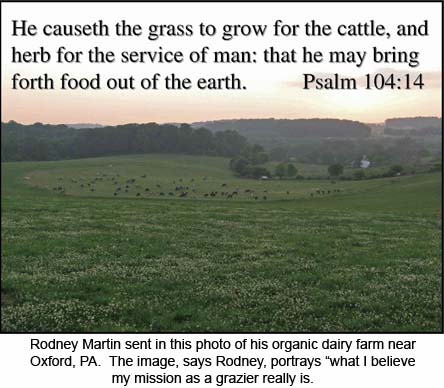
The woodland and pastures of Brookhill lie dormant waiting for that next burst of sunshine.  Walking the upper tract this morning, the tender green shoots below the bleached grass covering told of a long kept promise by the Creator.  Spring will come!  Life is just waiting for the okay from heaven.

This week, we said goodbye to our four roosters.  The hens seem much happier without them and they were not the roosters that we really wanted for breeding.  They went to a very good home.  Meanwhile, Richard and I are keeping our eyes peeled for a Colombian Wyandotte rooster.  If you know of anyone local who might have one, please drop a line to us.

The Colombian Wyandotte pullets that we got from a lovely couple in Harrodsburg are growing so fast!  This week, two tiny eggs appeared from them.  It is hard to believe they are coming into lay.  But...here they are giving us beautiful little pullet eggs that will become gorgeous large eggs before we know it.

The lake has a mottled glass block style surface this morning, evidence of thaw.  Feeding the fish is something Richard loves to do each morning.  When we can get a pole in the water, there will be catfish in the pan!  The lake at the bottom of the property has one distinguished resident:  an albino catfish that weighs around 15 pounds!  I've only seen the fish twice and was amazed at his size.

The weather is crisp and unforgiving cold but Spring is on its way.  My garden books are here.  More catalogs arrived today to entice me to plant a million lush posies about the farm.  My heirloom seed catalog is also here for vegetable garden planning.  A high functioning yet gorgeous garden is my goal.

Vegetable gardens are necessary but never pretty.  Most gardeners tell that it took about three years for them to get the look that they wanted.  Patience is not really a virtue of mine but the goal for year one is to have a decent outline to build upon year over year.  Pathways, raised bedding, and some containers may factor into the end design.  We were too late in the season for Fall planting but the portable greenhouse structure reserved for that will have hot house tomatoes and other heat loving veggies in it this year.  After that harvest is done, we will be busy putting together our Fall/Winter planting to harvest throughout the cold season.

A garden should work for the gardener through the years.  Don't stop gardening because you cannot bend any longer.  Bring the garden to you!  I will be using a few techniques to ensure that I can reach all my plants for many years while building something that also looks good in and out of season.  Plans from Spring 2014 extend to Spring 2015 with four season harvesting the end goal.  With any luck and a bit of sunshine, I should need very little from the market by summertime.

Do you have any great gardening ideas?  I would appreciate you posting them here.  I've always worked in other people's gardens.  Spring 2014 will be my very own and I'm anxious to get my hands in the dirt.

God bless!

Tina

Thursday, September 12, 2013

A New Beginning: Brookhill Farm of Ghent, Kentucky

BROOKHILL FARM, GHENT, KY 

It's been a long journey but we found the perfect farm for us.  We closed on a fantastic property consisting of 130 acres of rolling hills and pasture, two stocked fishing lakes, fruit and nut trees, vegetable plots, and two grape arbors.  The farm rests on the county line between Gallatin and Carroll counties in Kentucky making it convenient to Louisville and Cincinnati.


The woodland is abundant with first, second, and third growth trees making a lovely home for white tail deer and wild turkey.  This woodland also provides lovely shade and repose for the pigs that we will be rearing.  The lush pasture is perfect for rearing sheep, cattle, broilers, and this same salad bar is perfect for laying hens.


This is an ideal habitat for sustainable living and farming.  We are honored to own it and continue the management of this already well maintained property.  The previous owner was comforted in knowing that his farm would not become a real estate development.  It will remain a farm for future generations.


According to title search, this land first belonged to George Rice and is referenced in his will dated 1822.  Records indicate and locals estimate this farm dates to 1810 or earlier.  His family farmed it for generations until it was sold to the O'Neal family then to the Griffin family.  The previous owner, Flannery, sold it to us.  We look forward to working through the Winter in preparation for Spring.  Our small beef herd and chickens have a new home.  We are adding other animals this Spring and planting our garden.

I will be blogging about what's going on at Brookhill Farm as time allows.  We hope you stay tuned!

God bless!

Tina (and Richard) Boutall
Brookhill Farm
Ghent, KY
USA

Tuesday, March 12, 2013

The Quest for the Perfect Farm


EVERYTHING RISES AND FALLS ON STEWARDSHIP

Servant-Leadership and Land Management in Sustainable Farming


The quest for the perfect farm begins after a great hiatus in Canada awaiting my husband's immigration to the United States.  Sitting here, I must admit that we are blessed despite the long wait.  We have had the pleasure of being on honeymoon almost two years.  Life on the prairies of Canada is rather peaceful except during seeding, haymaking, and harvest time.


Even those weeks of hustle and bustle are tame compared to the city life to which I am accustomed.  We have been afforded the rare opportunity of uninterrupted time together.  Rising each morning, breakfasting together, and planning our day accordingly without the slightest threat of intrusion.


Life before marriage had a strict schedule.  While all farmers maintain a schedule, there is no brutish foreman tapping his fingers on the time clock waiting for you to arrive.  You are your own boss.  The weather dictates when you rise or lie down.  When the snow plow rolls out or the hay rake gets attached to the tractor.  During Summer, the rooster wakes us to the smoky blue and vivid pink hues of mixing air and rising sun that make Manitoba such a special place.


Occasionally, the Lord will brighten your day with a double rainbow before the fiery orange disk settles in the distance.  Low hanging clouds mimic the mountain ranges so common in the southern States.  Alas, it is but an illusion.  The clouds must laugh at all the newcomers here.  The TV hums softly after supper and the coffee is always fresh.  Daylight when it is warm lingers until almost ten o'clock each evening before the moon decides to grace us with her presence.


Yet, when the snow comes the world becomes a blank page should a white-out occur.  In the evening, the moon is your only light as the wind cuts through the prairies depositing and drifting snow without care while we remain inside and warm.  The morning after a good snow, the prairie's pristine countenance is displayed so pure and true that one might think the vestige of God lies before him.  Yes, we have been blessed.


These past months were filled with Internet queries, perusing real estate listings, researching sustainable and organic farm practices, learning more about food safety and agricultural legislation in the United States.  Each state in the Union has the right to make their own food safety laws in addition to the rulings of the Food & Drug Administration (FDA) and the U.S. Department of Agriculture (USDA).


For instance, one state may allow the sale of raw milk direct to the consumer while another state strictly prohibits such transactions between the farmer and end user.  Learning the rules and regulations for the state in which you plan to operate is crucial.


The question arose whether we wanted to be just a sustainable farm or certified organic?  If possible, we would love to be a certified organic farm but that poses some difficulty.  Unless you purchase a farm that is already certified organic, the waiting period is three years due to contamination in the soil.  When regular crops have been planted in the soil, chemically fertilized, and sprayed with different cocktails of weed killing solution the ground is contaminated by default.  Whatever it renders in the next few years will contain a measure of chemical.  This is why ground must be worked without chemical fertilizers, weed killers, or pesticides for three years.  The land must have time to recuperate and return to its original state before one can apply to receive certified organic status for their farm.


There are organic farms for sale.  The ones that we located were either too far from where we wish to be or lacked enough acreage for our business model.  Most sustainable farms are grassland based, which seemed easy enough to locate.  At least, I thought it was easy!  The challenge is finding the proper acreage to fit your model.  And...it must lay right.  If you are interested in sustainable farming, please go to www.feedtheworld.org for information on how sustainable farming can end world hunger.

For example, a hill farm may offer spectacular views but unless you keep sheep and goats exclusively, you will run into grazing issues with other livestock.  If land is inaccessible to an animal, it will not be grazed.  Then, it must be cut for hay or tilled into cropland to remain useful.  If the hills are too steep to operate a tractor safely, the farmer's only recourse is to let the sheep graze it down.


Being raised in hill country but never farming, I could not comprehend the importance of this in the beginning.  After much tutoring from my dear husband, I have come to understand why the lay of the land is so important to a farmer.  My initial response was, "Oh, then we should just buy flat cropland."  Again, I had the wrong answer.  This city girl was so confused.  The cropland is plowed up; grass would have to be sown.  The L&N rail line below crosses the Banklick Creek near my former home.  The hills of my home were too steep for our farming model.  We learned quickly that a move further south into the state would be necessary to meet our objectives.


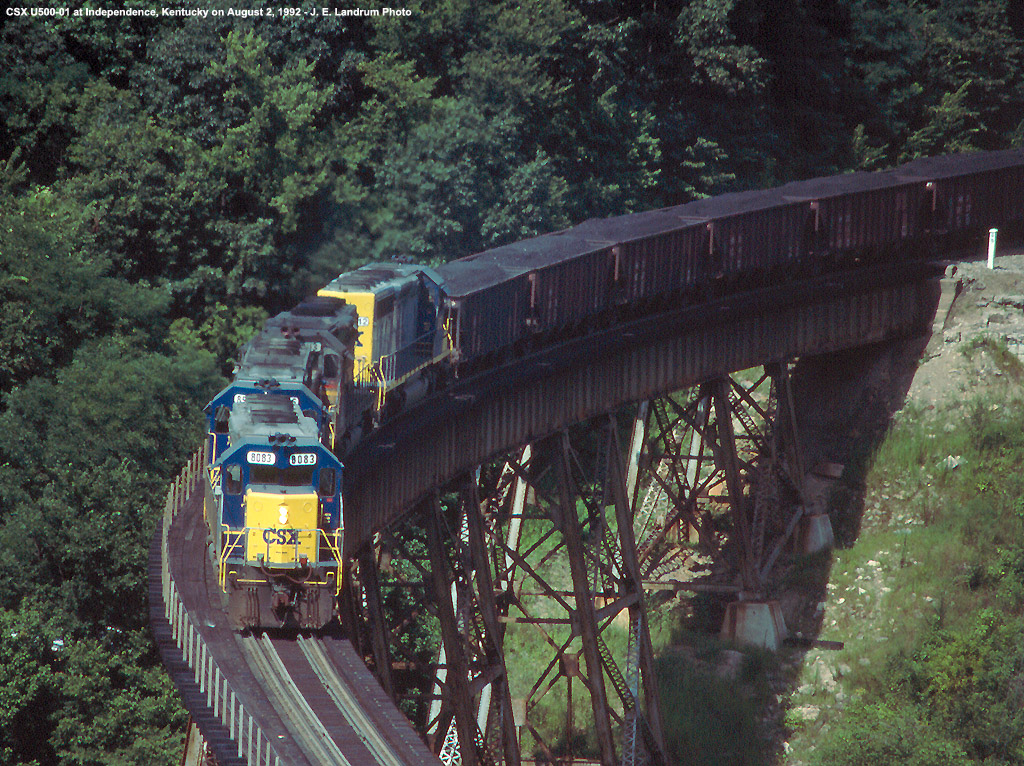
Trees provide shade for livestock during the warmer months.  On cropland, they are few.  So, cropland was not the answer despite its flatness because it lacked enough wooded area for the pigs, temporary shade for the cattle, the chemicals in the soil went against our principles, and turning it back into grassland was cost prohibitive.  The mix of cleared and wooded areas as seen in the small farm located in Independence, Kentucky depicts an ideal sustainable setting below.


To the commercial farmer those chemically treated crop acres are worth a fortune evidenced by the price tags on most for sale.  This baffled me as my inner accountant tallied up the cost of commercial/conventional farming exclusive of the damage it does to our landscape and the environment.  The conventional farmer spends his life paying off his mortgage, financing equipment purchases to work the land, buying seed to plant in the land, repairing machinery as it fails, and paying seasonal workers to harvest the crop.  He spends his nights worrying about the weather and his yield.  He spends the morning surveying and hoping for rain or sunshine, whichever he needs that day.  He has a mortgage that will either be the ruin of him or the haunting of him until he retires.  Only in retirement does the commercial farmer really get paid for his life's work.  How sad to toil all those years and have to relinquish it to make it really pay.  This should not be!  When sustainable farming methods are used, the farmer is not only more productive.  The sustainable model ensures record revenues per acre while keeping operating costs low.  In many instances, the sustainable farmer is making more annually on fewer acres than the commercial farmer is making with thousands of acres after expenses.
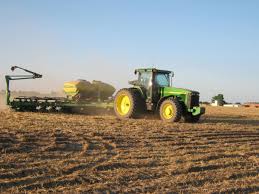


Progress and ingenuity birthed the tractor.  The large Shire horses were unhooked from the plows and horse power became an engine specification.  Even organic farmers employ machinery unless they prefer the more Victorian farming methods, which are being practiced on a few farms right now.  Machination preceded the feed lot system, however, which was the greatest disservice ever fostered against man and beast.  The sustainable farm can be effectively run with slightly more manual labor but greatly reduced machine time and fuel expenditure while it replenishes the land and adds inches of precious top soil over time.


An in-depth series on the Dust Bowl aired in 2012 that opened my eyes to the true horror of this 1930s agricultural disaster.  Now, the irrigation methods used to keep that soil yielding have greatly depleted the water table in the West.  The Colorado River Basin is at risk.  How much longer can this type of farming in the prairies be sustained?  When the prairies become a desert, the Earth will render its verdict.  We will have no hope of appeal with Mother Nature.  A report dated December 12, 2012 from the U.S. Department of the Interior bears the grim news of projected water imbalances between supply and demand. Once it is gone, we have no more.  

You can read it here:   Salazar Press Release

Instead of giving back to the soil and enriching it, the plows came through and raped the land.  Never more would bison and cattle pass through to graze and fertilize most of those pastures.  Some have been put back into grassland but the majority of this land remains in crop.  Land that should have never been plowed from the beginning.  Chemical fertilizers were born to replace the manure, which gave back to the Earth and kept it fertile.  Species no longer lived in harmony in the farm yard.  Operations focused on single species production and placed them in large and poorly ventilated structures with inadequate waste systems.  Dead walks came into being as daily inspections for deceased animals were necessary given the cramped living quarters that resulted in higher livestock fatality rates.  One look at the suffering and diseased chickens inside this factory chicken farm operation tells us all that we need to know as Americans, consumers, and most of all: human beings.


Diseases became more prevalent.  Antibiotics swept onto the scene.  Living conditions continued to decline until someone decided to take a stand against these atrocities committed in the name of profit and fast food.   Organic farming is more labor intensive than conventional farming.  However, the cash outlay for equipment is much lower than conventional farming.  We are going back to the old ways.  The ways that produced healthy food.  Twenty years ago, green beans had 43% more calcium than they have today.  So, are these commercial farming methods really better?  They are faster and easier but the quality is much lower.  The raped soil cannot render the quality that we once enjoyed unless we nourish it.  We cannot do this via conventional means and arrive at the same result.


I have learned that a return is absolutely necessary to provide nutritious food and remain a faithful steward of the land.  The first principle in farming according to George Henderson, author of The Farming Ladder, is "...to leave the land better than you found it."  This is our mission and the reason why finding the right farm is so important in our quest.  Not just any farm will do.  It must be the right farm for us that we might give back a portion of what we have been given.  Always giving thanks for what the good Lord has given us to care for and ever looking forward with hope that others will take this journey with us. To nourish the land and make it prosper is a farmer's high calling.  May we never forget it.

Be blessed!


Thursday, January 12, 2012

The Silent Killers, Part 1: Excitotoxins

Sadly, the Silent Killers have to be discussed in parts due to there being so many of them. 

The first that we will cover is the excitotoxin.  While very small amounts of these agents occur naturally within the body, triggering your natural reward system, in larger and more concentrated amounts these excitotoxins can cause a host of neurological problems, medical issues, mental illness, and even death as we each absorb things differently. 


Recommended Reading
EXCITOTOXINS:  The Taste That Kills
 
Click here to Purchase:  http://www.amazon.com/Excitotoxins-Taste-Russell-L-Blaylock/dp/0929173252

.
The following videos are loaded with shocking truths.  Truths that the FDA did not want Americans to know.  Some conspiracy theorists assert that the addition of excitotoxins into our foods is part of an elaborate plan devised by the U.N. and the elitists who run the world to accomplish two principal objectives.

  1. The dumbing down of society making us easier to govern if the majority has a lower IQ after years of toxic consumption leaving few left with a high IQ to figure it all out.
  2. The reduction of the world population by 80%.

YOU DECIDE...
Dr. Mercola


If the conspiracy theorists are correct, then the contamination of the U.S. food supply was carried out in hopes that most would expire and those who remain would be more pliable, easier to govern, and too stupid to resist even the most objectionable legislation.

So, let's start with the average American fast food meal, which usually consists of a "meal deal" of sorts.  We have a burger, fries, and a soft drink.  Given the U.S. consumes over 4 billion gallons of diet soda annually, we will discuss artificial sweeteners along with high fructose corn syrup.

This next video addresses glutamic (MSG) and aspartic (aspartame) acids in your meal.  The MSG will be found in your burger's components and your fries, along with other chemicals that we'll discuss in Part Two.  The aspartame cocktail is, of course, your diet soda.  (See the video after the 3-part series on aspartame for a quick look at high fructose corn syrup if you drink regular soda).


Aspartame deserves an in-depth look having 92 documented side effects including brain lesions and tumors.  I encourage to view these three videos and drop your diet soda like yesterday's flat one.

Part I
Part 2
Part 3 

Now, on to a discussion of high fructose corn syrup!


The High Fructose Corn Syrup Conspiracy - CBN.com

So, how do we fight back? 

  1. Stay away from GMO foods, high fructose corn syrup, chemical cocktails (additives), and artificial sweeteners.  Make better choices.  Read nutritional and ingredient labels before you buy! 
  2. Opt for better alternatives to sugar like Stevia extract, which is plant derived.  If you opt for sugar, make sure it says CANE SUGAR on the label.  If not, you're just purchasing corn syrup solids or crystals made to appear like granulated sugar.  Either real cane sugar or stevia is best. 
  3. Get your BRAIN POWER back!  Check out Dr. Mercola's 7 Surefire Ways to Get Back Your Brain Power. 
  4. Do not fall back into bad habits.  Just because MSG-laced foods taste good and diet soda has always been your crutch doesn't mean it will kill you any softer or be kinder as it dumbs you down.  Seriously.


Dr. Mercola, 7 Surefire Ways to Get Your Brain Power Back!


 Folks, it's time to take our right to wholesome foods back.  After this eye-opening bit of research, I feel sort of dumb.  Is it okay that the government is partly to blame for that?  Or am I without excuse again?  LOL :)

Be blessed (and don't be fooled)!

Wednesday, January 11, 2012

The Silent Killers, an Introduction


About 14 years ago, I was diagnosed with celiac disease after being misdiagnosed from the age of sixteen.  I was comforted, in that, I had finally found a doctor who cared enough to find out what was really wrong with me because I had suffered most of my life.  Along with that diagnosis, he recommended a book for me to read called Breaking the Vicious Cycle that explained my condition in more detail.  It also gave real accounts of not just adults but children whose conditions were so severe that the symptoms were not so late in surfacing as mine.  Frankly, this was all so new to me that my family would not have picked up on it anyway. 

We were simple folk; we ate simple food.  The fourth of five children, our meals were based on budget.  To my mother's credit though, she did her best to always have a protein on the table, two vegetables, potatoes often, and usually some kind of homemade bread, biscuits, or cornbread.  By any standard, she did right by her children.   We did not have soda or cola in the house; potato chips were a treat for picnics only.  As a result, desserts usually molded on the counter.  Mom was the one who usually liked the cake and Dad loved pie or cobbler, which I always hated.  We were the typical middle class family on a budget. 

It was never my mother's choices because she always tried to make a healthy meal despite the occasional beans and cornbread with loads of butter, biscuits, milk gravy, and sausage so common to our region.  No, it was what lurked behind the scenes that moms everywhere had no clue about:  chemical additives in canned or processed food.

When I share my diet restrictions with folks, they always compartmentalize it by saying to me,

"Wow, that's too bad you can't have that stuff.  I love gravy and sauces, McDonald's, and pizza.  I'll enjoy some for you!"  They laugh it off and just go their way thinking, "It doesn't bother me like that so it is okay for me to eat it." 

Well, the longer I have read nutritional labels and studied most of these "ingredients" the more that I have learned that it DOES impact others.  While my disease also makes me unable to tolerate things such as wheat (and its derivatives), corn (and its derivatives), and soy of all sizes there is an additional chemical sensitivity that plagues me. 

Actually 25% of all children who lived during the 1970s have chemical sensitivities due to the heavy use of MSG during that decade not only in our foods but in our vaccines (as a stabilizer).  Yes, it was even in our school vaccinations!  The chemicals in our food are lethal but few people are talking about it even though other countries outside the U.S. refuse to put these additives in their foods (and will not import food from the U.S. that contain these deadly substances).  Yet, the U.S. continues to produce and provide for mass distribution foods containing additives that cause sterility or reduced fertility, can lead to blindness, can cause psychosis and nerve damage, brain damage and sometimes brain cell death.  These chemicals have been linked to obesity since the 1960s and studies from then until now continue to reinforce these truths.

How did this happen?  Folks, it happened because we are too many generations removed from the farm as a society.  Progress came and folks left the farming life for jobs in the big city.  The general store who had a direct relationship with local farmers was replaced by the supermarket who was in partnership with large processed food producers.  People learned to rely on the grocery or supermarket for all their food needs.  The general store went away.  Towns grew.  More jobs were created that had nothing to do with farming.  Families sold off their land and moved to the city full-time. 

In my family's case, I am two generations from the farm really.  My great-grandfathers both farmed but my grandfathers did not farm.  They only worked on farms and lived a fairly rural life.  My father was fortunate to work on his grandfather's farm each summer or any time that his parents would let him visit the farm.  My father's family although not farmers had a few chickens, grandma kept a garden, canned every season, fattened a hog for the killing season, etc.  The other small family farm down the road from them had a cow.  They bartered eggs for fresh milk daily.  It was my father's job to milk that cow and bring the pail home each morning.  The neighbors came and got eggs as they needed them.  No one ever kept a tab; it was a handshake agreement that worked quite well.  They only lived on a small acreage outside of town, not on great grandpa's farm, but my father still grew up eating safe, home grown foods, and fresh raw milk. 

When my Dad was 14, his father moved from Louisville and left his job as a butcher for a well paying factory job in Cincinnati.  The rest is history.  No one in my family ever returned to the farming life.  I will be the first one to go back in time and try to do things the way my great grandparents did.  I'm unsure how much damage has been done from what I have ingested in this life before learning all these things.  I only hope that turning around and doing it right will extend the rest of the life that I have and ensure that my nieces and nephews will take note, eat well, and live long happy lives with this information. 

My great-grandfather William Clark lived to be 89 years old.  He died after slipping on ice on his way to pick up the morning mail.  His skull was fractured and he lived just a few days after the fall.  Everyone wonders how long he would have lived given his good health despite his years.  This man farmed 290 acres of tobacco every day until he was 86.  Then, he sold the farm and moved to town to care for his sick brother, Ike, then 83 years old.  He ate biscuits, gravy, fried eggs and chicken, had his whiskey every night, and smoked a pipe full of the tobacco that he grew.  He did everything that medical professionals today will tell you not to do.

So, I kept thinking, how was he unharmed by his lifestyle?  He outlived three wives and was engaged when he died!  He would dance an Irish gig for anyone who asked and on special request he would walk around on his hands for the grandchildren.  How did he live so long, never sick a day, and full of life until the end?  Well, for starters, his food was not processed.  Everything that he ate was either raised on pasture right there on the farm or he grew it out of his own soil.  He made his own whiskey.  He grew his own tobacco, pure, not laced with chemicals like today.  His life was pure and unadulterated; his food was the way God intended it to be.

There are a few chemical additives for discussion in the next blog complete with resources for your own research.  I hope you enjoy these installments as I share with you why I have worked so hard to get closer to my food (and why it is equally important for everyone to get closer whether they have a condition like celiac, or not).  The longevity and the quality of your life depends on it.  Really.

Be blessed!

Monday, January 9, 2012

Pork Production Then and Now: Interview with a Farmer

Pork Production Then and Now
Richard Boutall
Cardale Park Farm
Cardale, Manitoba
Sunrise in Cardale, Manitoba
Q:  What is fundamentally different about pork production today versus production 100 years ago worldwide?


Basically, pork production has become an industrial factory type process. You aren't so much producing a pig to be killed for pork as producing a commodity to be sold for food. Even as little as 50 to 60 years ago, pigs were predominantly reared outdoors or in barns but on a much smaller scale. 


My father, for example, had an 80 sow herd, which in 1970 was considered a fair sized operation. Today an operation of that size would be laughed at by most pig producers.  Barns now are giant concrete structures housing thousands of pigs separated in to small pens on slatted floors. No thought is given for the comfort of the pig, the paradigm is; "How can we grow it faster, fatter, bigger and cheaper? The only time the pig is allowed to express it's physiological distinctiveness is by eating, other than that it's life is far removed from what it would be like in nature.


Q:  Curing.  When did this process transition from simple salt and brown sugar to a chemical cocktail?


The use of saline solution injection in to the meat to cure bacon started as long ago as the early part of the 20th century. As time has gone on and mass consumption of pork has grown the process has become more widely adapted so that today it is hard to find bacon cured in the original way. Saline solution, now with other added chemical preservatives (which really are not necessary), is the norm for bacon curing because it is easier for processors to make the bacon with. That does not follow that it makes a better bacon of course, though I guess that is up to the individual consumer to decide. It would be nice if the consumer was offered the choice though between naturally cured and chemically cured.


Q:  Pigs.  What is the best thing for the animal?  


The best thing for the pig would undoubtedly be for it to be able to live in the most natural way that it can. Putting a pig in a 18x24 pen with a concrete slatted floor filled with a bunch of other cell mates does not seem to me to be the best thing for a pig to endure. If you crowd the animals they have little room to move, to keep clean (something in nature that the pig actually excels at), to gain exercise and to express their physiological distinctiveness. I am not of the opinion that factory farming of pork is going to change anytime soon as the rule but I would suggest that it ought to.


A pig has a plough on the end of its nose for a reason and it is not so we humans can lock it up in to a pen with other pigs and give it a concrete floor to live on. Pigs need to root for food, they need to make wallows to bathe in because a pig has no sweat glands which is why they like to take a mud bath in the outdoors, something denied to them in a hog barn. To paraphrase the words of a farmer who I much admire; Mr Joel Salatin. "A pig is not just a piece of inanimate, protoplasmic structure to be manipulated however cleverly hubris can imagine to manipulate it. I would suggest that a culture that views its life in that kind of disrespectful, arrogant, manipulative fashion, will views its citizens the same way."


Think about that last quote for a second, to deny the truth of that statement is to be living in blindness as far as I am concerned.


Q:  Explain pastured pork versus pork raised in hog barns.


Ah, one of my favourite sights is to see a herd of pigs outside in a pasture savannah doing all the things that a pig loves to do best. Before I get to that though I'd better explain the alternative which sadly is the norm for a pigs life. 


A pig will be born along with about 10-12 other piglets, the birth event is called farrowing. In a barn situation the mother, known as a sow, will be confined in a "farrowing crate" which is a cage like structure which is designed to prevent her rolling over and killing the odd piglet by mistake. While this does occasionally happen in nature, if the sow was given plenty of room and lots of bedding it minimizes the risk to the piglet and is a lot more comfortable for the sow as in her crate she can barely move. The piglets are given injections for iron, vitamins and antibiotics. The piglets will be weaned at 2 to 3 weeks old, sometimes even earlier than that and are then moved to a nursery pen with lots of other piglets. Later they are moved to growing pens and then fattening pens as they age and grow. All the pens are concrete and crowd the pigs in so they have little exercise and no room to express their physiological distinctiveness. The air temperature is kept constant in the barn via fans and vents hooked up to thermostats, all the pigs are fed a ration of grain which is often corn,wheat and soy based and the feed is medicated to control illness in the pigs. Without the antibiotics and medications the pigs would likely never survive to be killed due to the overcrowding and atmospheric conditions within the barn. I'm not sure my description is adequate but if I put it like this; if the average consumer could see the inside of a factory production hog barn, they would never want to eat pork again, in my opinion. Thankfully, there is an alternative.


Pastured pork is very different: The sow may or may not be brought in for monitoring during farrowing but will not suffer the indignities of a farrowing crate. Once farrowed the piglets will be allowed to suckle for at least 6 to 8 weeks, sometimes more, in an outdoor setting. After weaning, the pigs are still outside on a pig pasture which is often open spaced woodland with lots of grass in it. The pigs are fed a ration of grain but this is not the only food they have for unlike the pigs in a factory barn, the pastured pig has many other things to eat such as grass, acorns, nuts, roots, insects, worms etc. which they dig up while rooting through the soil. These foods are full of protein and nutrients and give the pig plenty of exercise while working to find them. If the pig gets hot it makes a wallow out of mud to bathe in and it can also lie in the shade under tree branches. The pigs need no antibiotics and medications because they are not crowded together in an atmosphere full of airborne pathogens, they need no vitamin and iron injections because they get all they need from their food and from rooting in the soil which provides the iron they require. Because they are able to express their physiological distinctiveness or their "pigness" they are happy and when you see pigs in a pig pasture there is no doubting that they do indeed have a happy life.


Q:  Is pastured pork nutritionally better for you?  What do we lose nutritionally when we confine a hog?  Besides the animal suffering, how does the consumer suffer, if at all?


Nutritionally, pastured pork is far better for you. Now there are many proponents of the factory hog barn system that will show studies showing leaner pigs, lower fat profiles, nutrition profiles etc. What these studies fail to take in to account is that the pork is tasteless, spongy meat that actually is not that nutritionally good. For a start pork is not supposed to be "The other white meat", actually pork produced properly is a red meat with a far more succulent texture and superior taste to it than anything produced in a hog barn. 


The pork produced on pasture sometimes may have a little more fat but the profile of the fat is very different to that of a hog barn pig, the meat profiles differ enormously too. Pastured pork, like any pastured animal, contains higher amounts of  protein, vitamins, omega-3 and of conjugated linoleic acid all of which adds up to a very healthy food. Because the pastured animal is not fed a diet of antibiotic feed it will not have antibiotic residues in its meat and the heath of the meat overall will be far superior to that of a hog barn pig. 


Q:  Butchering now versus 100 years ago, for instance.    What did we lose in industrializing or automating this process?  What happened to the old-fashioned butcher shop?


Alas, butchering is a dying breed, almost extinct in North America actually. Certainly, any old chap can learn how to use a band saw and chop up a animal but where did the art of butchering go? Unfortunately, with the industrializing of food manufacturing and farming came the industrializing of the processing too. The paradigm was to find a way to chop up an animal as fast as possible, get it packaged, and sent out to a supermarket. When I was a kid, you didn't often see meat in a supermarket, you went to the butcher for it; now, there are few traditional butchers left. 


What we have lost with the industrialization of meat packing is traditional cuts of meat that made for wonderful meals and we have lost artisanal curing of meats and bacon. Don't get me started on the tasteless so-called sausages that are available in a supermarket today.  Suffice it to say, that it is criminal that todays generation cannot try the huge variety of flavoured and spiced sausages that I and generations before me were privileged to have known.


Q:  What can the average consumer do to procure quality pastured pork?


If a consumer wants to buy pastured pork then they will have to do a little digging but it is so worth the effort. It is not generally available on a supermarket shelf, however, it is available from many farmers around the country. You may find it at farmers markets, farm shops, farm produce buying groups and CSA's (Community Supported Agriculture groups) . Use Google to find farm shops or markets in your area. Use www.eatwild.com which lists organic and sustainable pasture farmers in your area. Don't be put off because you have to do a little work to find it, what is more important in your life? What you feed your body with or spending another hour watching some stupid reality show on television? (Seriously, they get dumber every week!) 


The process can be fun and if you get the chance, visit the farm where your pork is going to be coming from. Ask to see how the animals are looked after - if the farmer is transparent and has an open door policy then you know you are on to good food that is produced well.  Seeing pigs in a pig pasture and knowing that their lives are happy makes a huge difference when you actually come to eat them. Knowing where your food comes from  is always a good thing and you can make new friends in the process. Buying your food outside of a supermarket environment becomes a fun, social thing to do.  How many people have a fun time shopping in a supermarket?


Q:  How can others help to spread the word and educate others about how important it is to get close to your food source:  the farm where it was raised?


The bottom line is that in reality (at least for now) most people are not going to change where and what they are buying. It's like quitting smoking - you have to WANT to change. That said, look back 50 years and see how many people have quit smoking that would never have believed they would (I include myself in that). 


The good news is that there is a growing movement of people who are concerned about what they are eating. The key to spreading the word is enthusiasm for the subject, the more enthusiastic you are, the more people want to know why you are so enthusiastic and happy so that they may find that enthusiasm and happiness also. Talk about food, cook it and have people over for dinner so that they can taste the difference, emphasize the positive things about sustainable food. 


It can be an uphill battle at times trying to get people to understand that knowing where their food comes from is important.  We, as humans, have become remarkably complacent and trusting of our food sources.  Even I, as a farmer, have had my eyes opened tremendously in the last 10 years as to what really goes on behind the scenes in the food production model of factory farming and food processing. It is not a pleasant epiphany when you find out the truth but it is remarkably rewarding when you find there is an alternative and it is a good one for both animals, farmers, and consumers.


Sunday, January 8, 2012

For the Love of Bacon (and an English Hog Farmer's Son)!

The way to a man's heart is through his stomach.

Mom said so and I believed her.  When Richard and I met, I began stuffing my husband.  Yes, you heard me and no, it was not taxidermy!  It was down home Southern cooking.  We hadn't known each other very long until he enjoyed the comforts of homemade fudge, biscuits and milk gravy, waffles loaded with fruit and cream, beans and corn bread, real fried chicken, kale greens, chicken and rice stew, cajun sweet potato fries, and thanks to me his first omelette just to name a few things that graced his plate.  All these "stick to your ribs" meals were complimented by more desserts than you can imagine.

I was crazy about him.  He loved southern food.  So, sweetening him up was absolutely necessary you see (at least, that is what my mama always told me).  Or maybe I'm just old-fashioned and there was some deep part of me that desperately needed to declare my domestication.  It had been in a dusty old trunk in the attic cubby to that I will attest.  A single girl's cooking never exercises culinary skill.   Unless, of course, you count the graceful way one deposits a tray into the microwave as a plus.

One morning my darling husband asked for a "fry up" by which I deduced he must mean something from a skillet.  Translation skills and culinary expertise.  My tool belt definitely needed a few more loops!  So, after a brief exchange the American determines this is fried eggs and whatever else.  I begin frying what I know to be bacon.  However, this was not what my dashing Englishman had in mind at all.  My husband pleasing radar was in good order though as I did not fry the strips crispy.  That would not have done at all but since it was more on the chewy side but well done husband smiled through breakfast as we made cow eyes at each other.  Then, he breaks the news.

"Darling, in England this is not proper bacon.  It is what we call streaky bacon.  A proper bacon is back bacon.  We may flavour a recipe with streaky but we would never serve it with eggs."

Sliced English Back Bacon

Utter and irreversible culinary failure!

"There's more than one kind.  I mean, well, there is Canadian bacon," I started.

"No, darling.  That is not bacon either.  I don't know why they call it bacon for it most certainly is not bacon. It is gammon or what you call ham."

"Oh," I said voice trailing into the distance.  

For heaven's sake, I needed a recovery and had none.  

"Do you mean fat back?  Salt pork?  Jowl bacon?"

"It is part of the back, yes, but the meaty  portion."

"Oh, my mother uses fat back to season beans.  You wouldn't want to eat it fried though that would be pretty gross."

All I could do was apologize.  There was no such thing in the grocery stores that I had graced.  At least, until, my husband and I discovered Jungle Jim's the ultimate foodie paradise, which boasts a section containing all things English including back bacon!  (And I knew in that moment that there was a God above who loved me because He led us to find what my husband really wanted to eat!). 

American bacon is essentially pork belly while English bacon is cut from the back, not the belly.  It is remarkably lean giving off very little grease when cooked.  It is meant to be cooked well but not crispy to retain its succulence.  This was an education for me.  And, I started feeling a little duped.  Why are we eating pork belly when a proper butcher's guide tells you different?  I even happened on a British girls' blog living in America who asked, "Where can I find real bacon?  I found the streaky pork belly and fat off the back but what did they do with the meaty round portion?  What did they do with the rest of the pig?"  Interesting, eh?

First...

For the health conscious reader, I was amazed to learn that each slice (what husband calls a 'rasher') whether American or English will cost you about 100 calories (calories will vary on slice thickness, of course).  However, the English bacon contains 5 grams of protein per slice drastically defeating its fatty opponent that only has 1 gram of protein per slice.  I humbly admit that America doesn't have everything if we can't get a butchering facility in our nation to slice a proper piece of bacon.  Folks, we've been hoodwinked.

At first, I was skeptical too but marrying the son of a hog farmer who also operated a chain of butcher shops in England left me with little argument.  They know the anatomy of the animal better than I ever could.  A followup trip to an old-fashioned butcher shop complete with a huge poster naming all the pork sections proved his case.  My question still remains though, "Why is the land of opportunity only cutting pork belly fat for us?  If the three big killers are heart disease, diabetes, and colon cancer then why aren't they providing healthier options for the people?"

Second...

It's not only the fattier portion but so chemically infused that it defies the word 'curing'.  Real bacon, just like it was made years ago in this country, was cured with salt and brown sugar.  It was not infused with brine, dextrose, nitrates, and nitrites.  Bacon in Britain is still cured the old-fashioned way, which is much healthier and truer to the beast.  I hate to admit it because I love American bacon.  The grease definitely has its uses too in southern cooking but the truth is they have sold us chemically infused fat and told us it was bacon.  Yes, it is a bacon of sorts but Europeans only chop this in bits and use it to flavour dishes (lardons) and the Italians do much the same and call it pancetta.   It is a flavouring not a meat portion cured with salt and brown sugar, not a chemical cocktail.

Third...

Pork is NOT the other white meat.  Pork is a red meat if it has been properly raised on pasture or in the woodland, not fattened in an 18x24 space with about 20 other pigs bumping into it with its only diet being corn and confinement.  That is not how a pig should be raised.  If they are raised the right way, they are also one of the cleanest animals.  If they put all of us shoulder to shoulder in a feed lot, we'd smell pretty special too after awhile.  

So, the flesh is whiter because they are...malnourished, cheated, cheaply fattened on corn, duped just like the folks they are bred to feed.  In 1991, the media took off with that slogan.  In March 2011, the Pork Board changed their slogan to:  "Pork.  Be Inspired."

What's wrong with this picture?  I mean, why not stick to that 'white' lie?  

Advertising Scenario:
The pork has lost its flavour and color due to commercialization and confinement with no grazing.  Folks may notice.  Let's drum up a national campaign for pork as a white meat and tell the whole world it is just as good as chicken!  

Pork sales rose 30% in 1991 due to that advertising.   Right in line with the new lie about corn sugar....I'll save that for another blog.

Large Black (Devon) Sow on Pasture

This was my first discovery on the road to getting closer to my food.  There's more.  Tons more.  
Every greasy bit is open for discussion too.  If you would like any links, let me know.  Otherwise, Google away because the information is out there.  Most of us just don't google pork production on a daily basis.  We watch TV and catch every commercial though, and we believe them.

Next up:  Pork Production Then and Now (with guest, Richard Boutall)!

Be blessed!

Saturday, January 7, 2012

A Fresh Perspective

Going from corporate to country wasn't easy.  

I didn't see a bright shining light nor did I see any shiny things.  It was a slow process that gently accelerated when I met a farmer.  Fortunate for me, he liked this city girl and we tied the knot last August.  Getting married is a life changing experience for anyone.

In my life, however, EVERYTHING has changed.  I didn't just have to adjust to married life.  I had to transition from corporate to country.  Life in the fast lane ran right up on a tractor proudly touting its slow moving vehicle sign.  In many ways, it rocked my world.  Confusion led to aggravation before education brought on enlightenment.

There is more to farming than I ever dreamed possible.  The girl with a degree had to ask questions, dig deeper than the soil, and return for more question and answer.  I still don't know half what I should but that doesn't intimidate me.  It challenges me.  This blog is a journal between me and anyone who wishes to know more about agricultural life from the city girl's perspective.

Some things are downright funny while some entries will be rather serious.  For starters, the redneck meets the redcoat in this household.  Second, no subject is off limits because I'm a naturally curious sort who believes the day we stop learning is the day that we all die.  I will not become roadkill on the information highway.  I prefer the fast lane...even in a country setting.

The city girl is going to talk about how far folks are from their food.  No, I don't mean how many miles that you are from the supermarket.  I am talking about how far removed the family has gotten from the farm:  the source.  How has that distance impacted our society?  We know, in part, how these things occurred.  The part most do not know is what happened later, is still happening today, and what is intrinsically wrong with being that far removed from your food.

When my seven year old niece came home from school last month, she told me about her day.  Earlier that week, the class had taken a field trip to a nearby farm.  My niece milked a cow for the first time.  And I am proud to say she was the only child who volunteered!  (Yay, for my little girlfriend!)  The teacher quizzed the children about that trip to gauge what each learned.

She asked one girl, "Where do eggs come from?"

My niece said, "Aunt, do you know what she said?"

"No, what dear?"

"She said 'from the grocery store'!  So, I turned around and said, they do not; they come from chickens!"

The little girl grimaced and said, "Ewww!  I'll never eat an egg again!"

Country folks, I hope you read along but this blog is really for the city folks who, like me, are many generations removed from their food.  Some terminology is old hat to a farming family.  The old hat is new gig for city folks so I will bring it down to laymen's terms the way my husband explains things to me.

Until I met a farmer, I had no idea just how removed that I was from my food.  Food was my life and livelihood.  I managed a bakery when I met my husband.  Then, I went on to managing a grocery store.  In the mid-90s I worked for a grocery procurement cooperative of supermarket retailers.  I was well versed in marketing strategies, private label management, creative services related to brand design, logos, etc.  I worked for a company whose quality department was a test kitchen.  I was trained in food safety; I taught food safety.  I also had five years in produce and floral while serving as the comptroller for the 1800flowers.com out of Chicago  I thought that I knew everything there was to know about food and related perishables.

I was never so wrong.

Hope you stick around until we talk turkey (and chicken).   With a few companion blogs from my brilliant better half, we are going to discuss cows, pigs, sheep, chickens, turkeys, and even rabbits if there is an interest.  What happens in nature and how the farm should mimic that same process.  How far should we be from our food?  Not very...if you want to know what you're eating.

Be blessed!