Showing posts with label land stewardship. Show all posts

Monday, October 21, 2013

Soggy with a Dose of Sunshine

It's a crisp yet slightly soggy morning here at Brookhill Farm.  The sun made its appearance at the appropriate time.  I walked down the drive to open the gate for the gentleman who works for us and retrieved Saturday's mail this morning.  I had company and forgot about the post until I unlocked the gate.

More cedars will be sacrificed today in the name of the almighty fence post!  We have quite a surplus and the additional cross-fencing that Richard wants will be done using our own wood.  That's a nice thought not to mention a great savings.  To date, 100 cedars have been felled.  Richard and I took a survey of the 65 acres of woods last week.  From various storms, many second and third growth trees have cracked and tumbled in the woods.  One old growth tree fell over the creek and reaches the other side as if to build a bridge for a mischievous ten year old with a tree frog in his pocket (for safe keeping, of course).  Managing the forest is just as important as making sure the fields produce delicious grass for the animals.  The thinning is necessary and the dead wood needs put to good use.

Hickory trees abound and are bearing nuts.  Coming late to the farm, we missed this year's harvest but found enough to dry and savor for the holidays.  The next order of business is identifying the different types of oak and maple within the forest.  At the entrance to the property there are about six sugar maples discovered via leaf identification.  Their bark is much lighter than I would have imagined for a maple tree.  My first guess was white oak or silver birch but I was wrong.  It took a few hours searching through tree and shrub books, identification guides online, and forestry web sites to find the exact match on this leaf.


Identifying species during the Fall is not as easy.  In the Spring, nature reveals its true self.  Once the decay of autumn commences, some telltale signs erase.  The discovery of the sugar maples had my mind fixated on delicious maple syrup.  My research took off in a new direction!  How might I tap these trees and get some of this yummy syrup?

The number of taps depends on the circumference of the trunk.  Anything under 10 DBH should not be tapped as it would cause permanent damage to the tree.  A spile is inserted into a tap hole drilled slightly upward to allow the sap to flow freely into a container.  When it rains, water taken up by the tree mixes with the sap inside allowing it to flow freely and continue to give.  The rain helps produce more sap.  The best time to extract syrup is Spring and Fall when the nights are frigid and the days are warm!


From what I've read, the extraction is easy when the tree is tapped properly.  The tricky part for me will be choosing the right spile.  Those who wish to do as little damage to the tree use a 5/16" spile.  A 7/16" spile was used in years gone by.  Many prefer the 7/16" despite the damage believing the 5/16" spile reduces sap flow.  Studies conducted recently show no reduction in sap flow using a 5/16" spile.  The tap hole is able to heal faster and the tree is happier.  Spiles are made from many types of materials now.  The question is:  which type is right for our trees?  I'll keep you posted!

Link:  New Options for the Maple Spout or Spile

The difficult part is boiling down the sap.  Commercial sap operations purchase large evaporators/reducers that boil the sap down into a syrup, removing all the water, and impurities from it.  One can boil sap down on a stove but it would take much longer to produce syrup or sugar that way.

The general formula:   40 gallons of sap = 1 gallon of maple syrup or 8 pounds of maple sugar

Without an evaporator, I need a large black cauldron in the back yard to boil down my sap should I decide to do this.  The trees cannot be tapped until Spring 2014 .  So, I decided to spend more time looking for other sugar maples in the woods.  The previous owners may have planted these or they could have been here.  If I find our only sugar maples are in the front near the brook, then I know they were a thoughtful addition.  I hope the woods yields more of them, however.  They are amazing trees.  The leaves are astounding and each one matches the size of Richard's hand.  Locals often call them "river maples" which is deceiving because that name doesn't tell the casual onlooker what gorgeous goo this specimen contains.


The more we wander, the more we discover.  These trees are another example of valuable resources that are 'untapped'.  As I returned from the brook with my leaf samples last weekend, my mind went  back in time while I walked the hill.  My father once said, "When you're old enough to know how to live, you're old enough to die."  As the chill bothered the arthritis in my right hand, my hip popped, and my bad leg reminded me it was along for the ride too.

From the cradle, every breath is counted.  No one knows exactly how many of those each of us gets to take.  I think of what I used to consider scenery.  Now, I see it as life, opportunity, sustenance.  Perhaps a better word would be 'provision'.  Then my mind takes me to that awesome concept:  Divine Provision or Providence.

Nature replenishes itself.  The human is the intruder into its world.  It is never the other way around.  Humans are blessed that we can draw from it, drink from it, and live in harmony with it.  It saddens me when I think of how many years that I've wasted never realizing all of what God's creation holds.  I feel that I should have been living this life always.  I'm grateful to God that I've awakened.  It's as if I have come alive for the first time.  My old eyes feel like a child's exploring this habitat.

A touch of sadness appears on my cheek.  I pray that the Lord gives me as many years to give back to the Earth that I spent thoughtlessly taking from it.  Every farmer's creed should be to leave the land better than you found it, not worse for you having raped it.

Take a walk through the woods sometime this week.  Collect some leaves.  Research and learn a little bit more about what grows naturally in your region, what may have been planted by settlers, and how each member in the forest does it part.  As you walk through, do not just admire the leaves.  Admire the ground beneath your feet.  Man cannot devise a carpet more lovely than the forest floor.

Be blessed...and leave it better than you found it!

Tuesday, March 12, 2013

The Quest for the Perfect Farm


EVERYTHING RISES AND FALLS ON STEWARDSHIP

Servant-Leadership and Land Management in Sustainable Farming


The quest for the perfect farm begins after a great hiatus in Canada awaiting my husband's immigration to the United States.  Sitting here, I must admit that we are blessed despite the long wait.  We have had the pleasure of being on honeymoon almost two years.  Life on the prairies of Canada is rather peaceful except during seeding, haymaking, and harvest time.


Even those weeks of hustle and bustle are tame compared to the city life to which I am accustomed.  We have been afforded the rare opportunity of uninterrupted time together.  Rising each morning, breakfasting together, and planning our day accordingly without the slightest threat of intrusion.


Life before marriage had a strict schedule.  While all farmers maintain a schedule, there is no brutish foreman tapping his fingers on the time clock waiting for you to arrive.  You are your own boss.  The weather dictates when you rise or lie down.  When the snow plow rolls out or the hay rake gets attached to the tractor.  During Summer, the rooster wakes us to the smoky blue and vivid pink hues of mixing air and rising sun that make Manitoba such a special place.


Occasionally, the Lord will brighten your day with a double rainbow before the fiery orange disk settles in the distance.  Low hanging clouds mimic the mountain ranges so common in the southern States.  Alas, it is but an illusion.  The clouds must laugh at all the newcomers here.  The TV hums softly after supper and the coffee is always fresh.  Daylight when it is warm lingers until almost ten o'clock each evening before the moon decides to grace us with her presence.


Yet, when the snow comes the world becomes a blank page should a white-out occur.  In the evening, the moon is your only light as the wind cuts through the prairies depositing and drifting snow without care while we remain inside and warm.  The morning after a good snow, the prairie's pristine countenance is displayed so pure and true that one might think the vestige of God lies before him.  Yes, we have been blessed.


These past months were filled with Internet queries, perusing real estate listings, researching sustainable and organic farm practices, learning more about food safety and agricultural legislation in the United States.  Each state in the Union has the right to make their own food safety laws in addition to the rulings of the Food & Drug Administration (FDA) and the U.S. Department of Agriculture (USDA).


For instance, one state may allow the sale of raw milk direct to the consumer while another state strictly prohibits such transactions between the farmer and end user.  Learning the rules and regulations for the state in which you plan to operate is crucial.


The question arose whether we wanted to be just a sustainable farm or certified organic?  If possible, we would love to be a certified organic farm but that poses some difficulty.  Unless you purchase a farm that is already certified organic, the waiting period is three years due to contamination in the soil.  When regular crops have been planted in the soil, chemically fertilized, and sprayed with different cocktails of weed killing solution the ground is contaminated by default.  Whatever it renders in the next few years will contain a measure of chemical.  This is why ground must be worked without chemical fertilizers, weed killers, or pesticides for three years.  The land must have time to recuperate and return to its original state before one can apply to receive certified organic status for their farm.


There are organic farms for sale.  The ones that we located were either too far from where we wish to be or lacked enough acreage for our business model.  Most sustainable farms are grassland based, which seemed easy enough to locate.  At least, I thought it was easy!  The challenge is finding the proper acreage to fit your model.  And...it must lay right.  If you are interested in sustainable farming, please go to www.feedtheworld.org for information on how sustainable farming can end world hunger.

For example, a hill farm may offer spectacular views but unless you keep sheep and goats exclusively, you will run into grazing issues with other livestock.  If land is inaccessible to an animal, it will not be grazed.  Then, it must be cut for hay or tilled into cropland to remain useful.  If the hills are too steep to operate a tractor safely, the farmer's only recourse is to let the sheep graze it down.


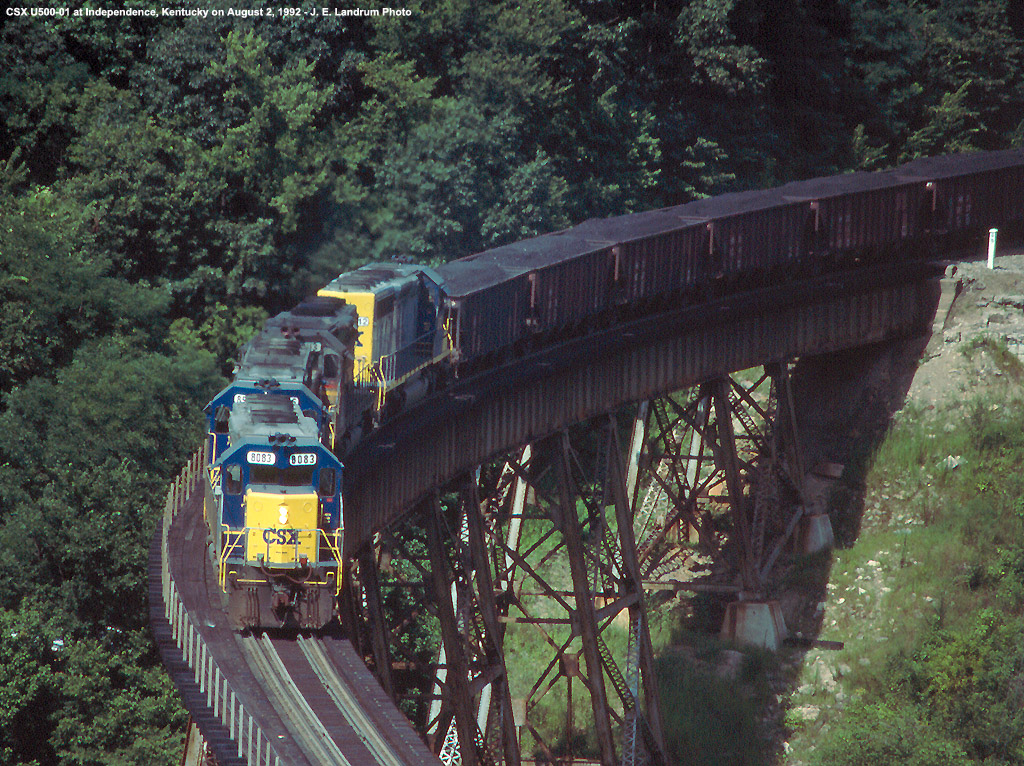
Being raised in hill country but never farming, I could not comprehend the importance of this in the beginning.  After much tutoring from my dear husband, I have come to understand why the lay of the land is so important to a farmer.  My initial response was, "Oh, then we should just buy flat cropland."  Again, I had the wrong answer.  This city girl was so confused.  The cropland is plowed up; grass would have to be sown.  The L&N rail line below crosses the Banklick Creek near my former home.  The hills of my home were too steep for our farming model.  We learned quickly that a move further south into the state would be necessary to meet our objectives.


Trees provide shade for livestock during the warmer months.  On cropland, they are few.  So, cropland was not the answer despite its flatness because it lacked enough wooded area for the pigs, temporary shade for the cattle, the chemicals in the soil went against our principles, and turning it back into grassland was cost prohibitive.  The mix of cleared and wooded areas as seen in the small farm located in Independence, Kentucky depicts an ideal sustainable setting below.


To the commercial farmer those chemically treated crop acres are worth a fortune evidenced by the price tags on most for sale.  This baffled me as my inner accountant tallied up the cost of commercial/conventional farming exclusive of the damage it does to our landscape and the environment.  The conventional farmer spends his life paying off his mortgage, financing equipment purchases to work the land, buying seed to plant in the land, repairing machinery as it fails, and paying seasonal workers to harvest the crop.  He spends his nights worrying about the weather and his yield.  He spends the morning surveying and hoping for rain or sunshine, whichever he needs that day.  He has a mortgage that will either be the ruin of him or the haunting of him until he retires.  Only in retirement does the commercial farmer really get paid for his life's work.  How sad to toil all those years and have to relinquish it to make it really pay.  This should not be!  When sustainable farming methods are used, the farmer is not only more productive.  The sustainable model ensures record revenues per acre while keeping operating costs low.  In many instances, the sustainable farmer is making more annually on fewer acres than the commercial farmer is making with thousands of acres after expenses.


Progress and ingenuity birthed the tractor.  The large Shire horses were unhooked from the plows and horse power became an engine specification.  Even organic farmers employ machinery unless they prefer the more Victorian farming methods, which are being practiced on a few farms right now.  Machination preceded the feed lot system, however, which was the greatest disservice ever fostered against man and beast.  The sustainable farm can be effectively run with slightly more manual labor but greatly reduced machine time and fuel expenditure while it replenishes the land and adds inches of precious top soil over time.


An in-depth series on the Dust Bowl aired in 2012 that opened my eyes to the true horror of this 1930s agricultural disaster.  Now, the irrigation methods used to keep that soil yielding have greatly depleted the water table in the West.  The Colorado River Basin is at risk.  How much longer can this type of farming in the prairies be sustained?  When the prairies become a desert, the Earth will render its verdict.  We will have no hope of appeal with Mother Nature.  A report dated December 12, 2012 from the U.S. Department of the Interior bears the grim news of projected water imbalances between supply and demand. Once it is gone, we have no more.  

You can read it here:   Salazar Press Release

Instead of giving back to the soil and enriching it, the plows came through and raped the land.  Never more would bison and cattle pass through to graze and fertilize most of those pastures.  Some have been put back into grassland but the majority of this land remains in crop.  Land that should have never been plowed from the beginning.  Chemical fertilizers were born to replace the manure, which gave back to the Earth and kept it fertile.  Species no longer lived in harmony in the farm yard.  Operations focused on single species production and placed them in large and poorly ventilated structures with inadequate waste systems.  Dead walks came into being as daily inspections for deceased animals were necessary given the cramped living quarters that resulted in higher livestock fatality rates.  One look at the suffering and diseased chickens inside this factory chicken farm operation tells us all that we need to know as Americans, consumers, and most of all: human beings.


Diseases became more prevalent.  Antibiotics swept onto the scene.  Living conditions continued to decline until someone decided to take a stand against these atrocities committed in the name of profit and fast food.   Organic farming is more labor intensive than conventional farming.  However, the cash outlay for equipment is much lower than conventional farming.  We are going back to the old ways.  The ways that produced healthy food.  Twenty years ago, green beans had 43% more calcium than they have today.  So, are these commercial farming methods really better?  They are faster and easier but the quality is much lower.  The raped soil cannot render the quality that we once enjoyed unless we nourish it.  We cannot do this via conventional means and arrive at the same result.


I have learned that a return is absolutely necessary to provide nutritious food and remain a faithful steward of the land.  The first principle in farming according to George Henderson, author of The Farming Ladder, is "...to leave the land better than you found it."  This is our mission and the reason why finding the right farm is so important in our quest.  Not just any farm will do.  It must be the right farm for us that we might give back a portion of what we have been given.  Always giving thanks for what the good Lord has given us to care for and ever looking forward with hope that others will take this journey with us. To nourish the land and make it prosper is a farmer's high calling.  May we never forget it.

Be blessed!